
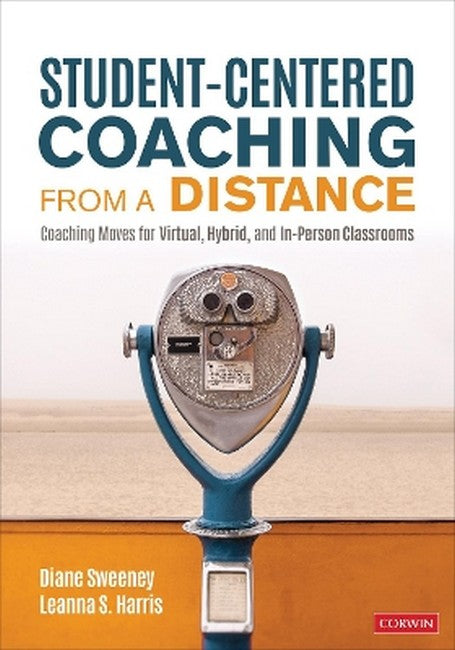

Description
Table of Contents
Dedication About the Authors Introduction Chapter 1: Keep the Focus on Student Learning Move 1: Continue to Coach in a Way That's Student-Centered Move 2: Build Relationships from a Distance Move 3: Determine What Learning is Essential Move 4: Find New Ways to Address Gaps What Can We Carry Forward? Chapter 2: Mini Coaching Cycles: A Structure to Engage Teachers in This Moment Move 1: Document the Impact of Mini Coaching Cycles Move 2: Start by Determining the Outcome Move 3: Ground the Work in Different Forms of Student Evidence Move 4: Co-Teach the Lesson Synchronously or Asynchronously Move 5: Reflect and Co-Plan the Next Lesson What Can We Carry Forward? Chapter 3: Using Student Evidence from a Distance Move 1: Think in New Ways About Student Evidence Move 2: Know What You are Looking For Move 3: Look for and Build Upon Students' Strengths Move 4: Sort Evidence to Differentiate Instruction Across Platforms What Can We Carry Forward? Chapter 4: Co-Plan with Teachers and Teams Move 1: Leverage and Embrace Technology Move 2: Start from the Intended Learning Move 3: Co-Plan Units within an LMS Move 4: Co-Plan Lessons that Don't Leave Any Students Behind What Can We Carry Forward? Chapter 5: Co-Teach Virtually and In Person Move 1: Expand our View of Co-Teaching Move 2: Co-Assess Across Platforms Move 3: Co-Deliver Across Platforms Move 4: More Tips for Co-Teaching What Can We Carry Forward? Chapter 6: Coaching for Rigor and Engagement Move 1: Create Conditions for Independent Learning Move 2: Self-Assessment Is a Must Move 3: Cultivate Independent Learners Through Rigor and Independence Move 4: Coach Toward Deep Learning Experiences for Students What can we Carry Forward? Chapter 7: Building Partnerships in Challenging Times Move 1: Partner with the Principal Move 2: Partner with Teachers Move 3: Partner with other Coaches Move 4: Nurture Your School Culture What Can We Carry Forward? Resource A: Results-Based Coaching Tool Resource B: Coaching Logs for Full and Mini Coaching Cycles Resource C: Co-Planning Tools Resource D: Protocols and Agreements Resource E: Tools for Self-Assessment Resource F: Language for Coaching Resource G: Checklists for Coaching References Index
About the Author
Diane Sweeney has been an author and educational consultant since 1999. The author of Moves for Launching a New Year of Student-Centered Coaching (Corwin, 2022), Student-Centered Coaching from a Distance (Corwin, 2021), The Essential Guide for Student-Centered Coaching (Corwin, 2020), Leading Student-Centered Coaching (Corwin, 2018), and Student-Centered Coaching: The Moves (Corwin, 2016), Diane holds a longstanding interest in how adult learning translates to learning in the classroom. Diane holds a Bachelor's Degree from the University of Denver and a Master's in Bilingual and Multicultural Education from the University of Colorado, Boulder. After teaching and coaching in the Denver Public Schools, Diane served as a program officer at the Public Education & Business Coalition (PEBC) in Denver. Since then, she has become a respected voice in the field of coaching and professional development. Leanna Harris is the author of The Essential Guide for Student-Centered Coaching (Corwin, 2020) and Student-Centered Coaching:The Moves (Corwin, 2016). She has worked as a teacher, coach, and consultant across grades K-12 and currently works with Diane Sweeney Consulting to help schools and districts implement student-centered coaching. Her work is based upon the belief that professional development for teachers is most effective when it is grounded in outcomes for student achievement - for every child, every day. Leanna is a passionate skier and cyclist. She lives in Denver, Colorado with her husband and three kids.